
Halo (2003) Game Icons Banners: A Tribute to Classic Design That Will Never Go Out of Style
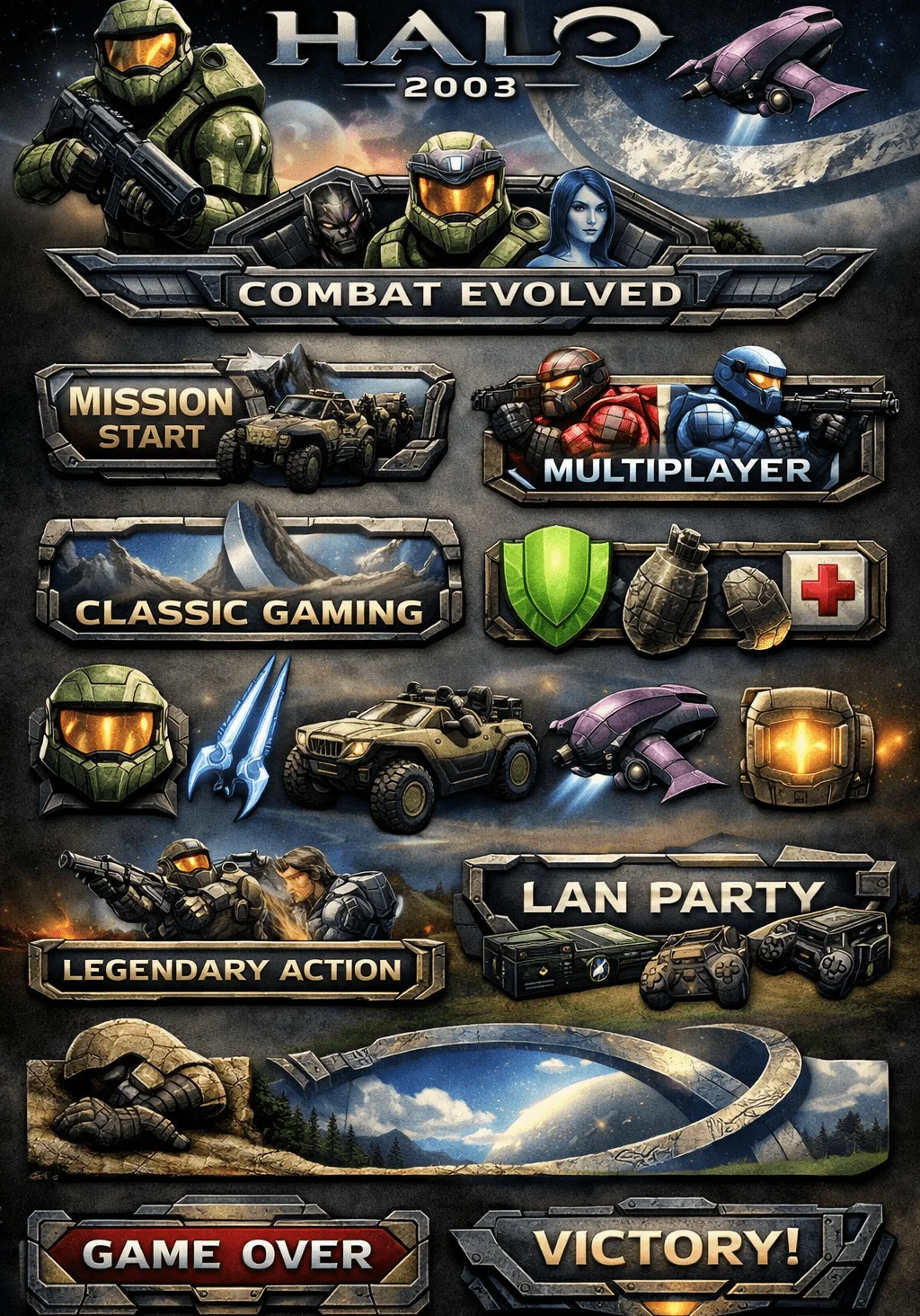
Halo (2003) Game Icons Banners weren’t just one sign; they were all important. Instead of being solid decorations, they were backgrounds that moved and set the mood for each scene.
People had different ideas about computer games after halo (2003) game icons and banners. Along with new ways to play, it had a style that players all over the world quickly came to recognise. These visual parts stood out the most for me in Halo: the flags and icons. What was it about these flags and signs that made them stand out? Also, what impact have they had on Halo’s ongoing legacy?
What Halo (2003) Game Icons and Banners Are Used For?
Halo (2003) Game Icons and Banners did a good job of telling stories. People often used magazine spreads, web graphics, and posters with space battle silhouettes, sneak peeks at strange worlds, and close-ups of the helmet. Our goal was for every shot to make you feel something, like awe, fear, or joy. In the years that followed, these banners changed how brands looked in the gaming business. They were just as well-known as the games.
Halo (2003) Game Icons Banners: Simplicity with Meaning, Is The Design Philosophy
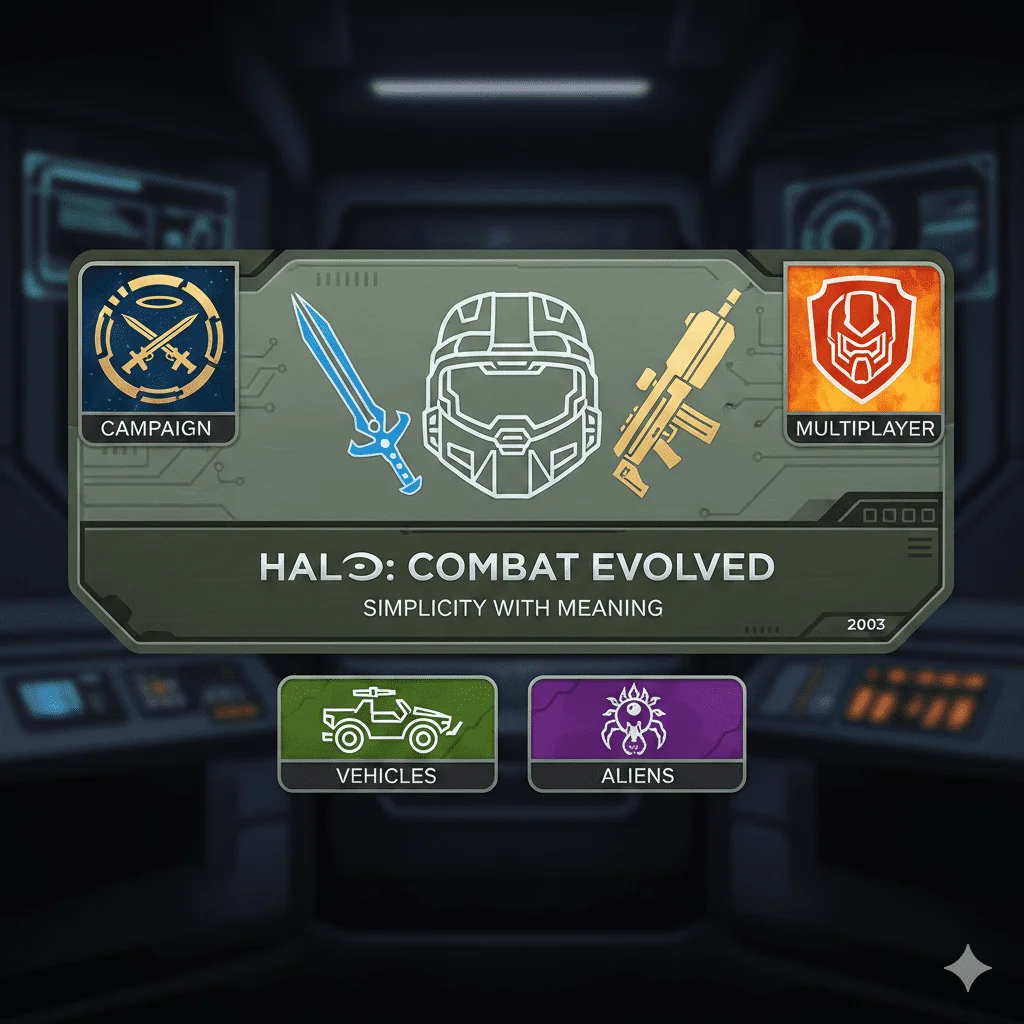
The simple signs and symbols in Halo (2003), Game Icons, and Banners were what made the game stand out. Many games at the time were making pictures with lots of small details, but Halo decided to keep things simple. Its marks were easy to see in a variety of settings and at smaller sizes because they were simple.
One picture that became the standard for the whole series was the Master Chief. It would be easy to find a flag or the background of a laptop in a remote location. Bungie made this design choice on purpose to help people remember the brand and connect with it on an emotional level.
This was possible because the people who worked on it at Bungie knew a lot about symbols. The story was better because of every part of it. The UNSC eagle sign is strict and authoritative, but the Covenant symbols’ round shapes made me think of faith and ritual. There were no words used in the Covenant symbols, which told a story about ideas, war, and life.
Changes in Halo (2003) Game Icons, Banners, and Graphics
The Halo series has gone through a lot of changes over the years. New systems, visual styles, and cinematic reality have been added to later games. But the original from 2003 still sets the stage for what came next. All of the franchise’s flags and badges were made on this date. In later Halo games, like Halo 3 and Halo Infinite, the forms and symbols were mainly the same, even though the graphics, textures, and movement were better. Fans could connect with each new release right away because it was always the same. It also showed how functional classic design can be—a design that can be used in many situations and is strong enough to last for many years.
Fans of Halo now hold on to the original badges with great care. As a nod to the good old days of video games, they show up in fan art, products, and even new versions of old games. The Halo (2003) banners, with their clean gradients and heroic patterns, are now taught as a great example of how to make visual branding work.
Effects on Culture and Legacy
- The videos and posters used in the 2003 game Halo aren’t just pretty to look at. They change how companies and people are dealt with in the game business. UIs were simple in a lot of games before Halo. After Halo, design became a big part of getting people to play and sharing stories.
- The Spartan helmet, for instance, became as well-known as the bat in books and the lightsaber in movies. Culture was important in more ways than just how much time it spent on screens. Fans were happy to show their support by putting the logo on t-shirts, computer backgrounds, and even tattoos. This showed that a simple symbol could make people feel strong emotions.
- Posters were a big way for companies to promote video games in the early 2000s. It has been used in Mass Effect, Destiny, and many other games to show fighters in silhouette against cosmic backgrounds in a way that is both realistic and abstract.
- And even the newest ones honour the original artists and their work by adding “retro skins,” which are collectables that bring back old characters. It shows how strong pictures are that they can still make people want to make new art.
- The Technical Craft Behind the Art: Halo’s images were made possible by solid technical work. The design team used early digital modelling methods to create icons that could be changed and resized so that they would look good on any screen, like a computer screen, a print screen, or a TV screen.
- Metal, matte, and geometric patterns were picked because they are simple and will last a long time. The banners had depth without making the devices work too hard. Light and shade were carefully balanced to make this happen. By looking at Halo through the lens of the future, the style would become classic instead of trendy.
Making people feel something was also very important to the people who made it. There was a lot of work that went into making sure that the whole game felt like a real-life science fiction world. The fonts on the screen lit up, and the armour had round ends. Bungie was known for this mix of style and feel, and other companies looked to them as an example.
Halo (2003) Game Icons, Banners’ Long-lasting Effects on Modern Games
Halo (2003) game icons, posters, and design language are still used by people who make games today. With flags and icons, science fiction and first-person shooter games have brought back the simple life. When making a visual story, it’s essential to find a mix between differences in colour, ease of use, and meaning. The futuristic look of Halo has been used in branding, user interfaces, movie ads, and video games. What began as a test of user interface design has become an essential part of society.
In conclusion
It’s not just that the Halo (2003) Game Icons Banners make you think of the early days of computers. They show how design can really make a difference in the world. Simple pictures that do something and make us feel something have become powerful storytelling tools that still have an impact on artists today.
Fans often remember epic fights and staying up late to play multiplayer games when they think of these icons. For people who make things, they show that form and utility don’t have to be at odds. Artists and technology can work together for the greater good and create stories that last, which is what fans love about them.
FAQs
-
What are the Halo (2003) Game Icons Banners?
In Halo (2003), banners and icons are used to make the menus, the interface, and the promotional materials look better. What makes them Halo? The Spartan helmet, Covenant marks, and futuristic menu pictures are just a few of the things that set them apart.
-
What do the flags and symbols for the game mean?
These pictures were a big part of what made Halo’s world and style so enjoyable. Icons showed the main ideas of the game, which were science, war between planets, and bravery. The banners set the scene with their bright colours and layout.
-
What changed about video games in general because of Halo’s colours and symbols?
A lot of other video games tried to be as simple and meaningful as Halo. The pictures from Halo became well-known in the video game business and were used in ads, menus, and logos.