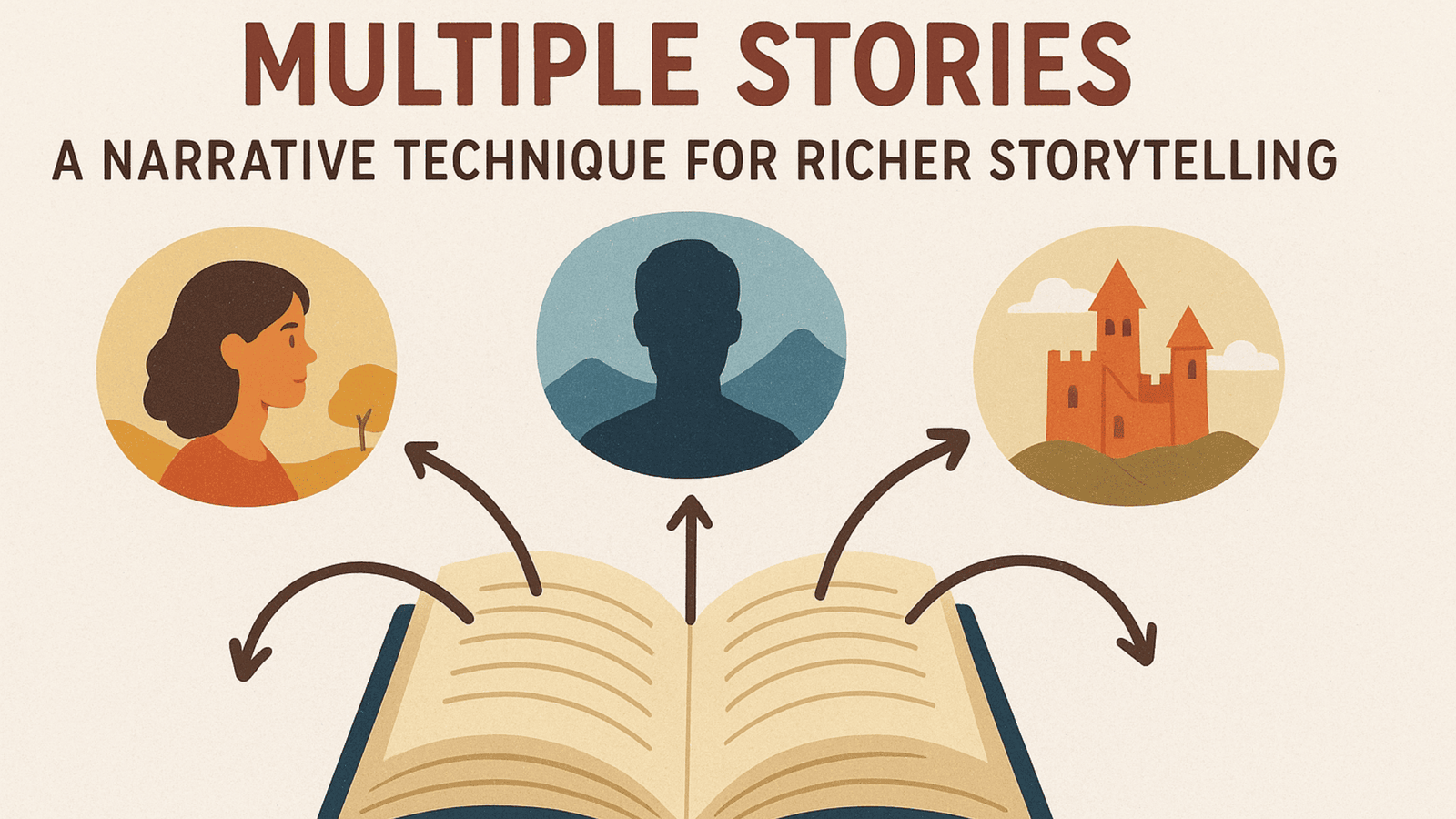
Multiple Stories: A Narrative Technique for Richer Storytelling
In storytelling, “multiple stories” refers to the technique in which the central plot consists of two or more separate stories that are equally independent of one another. This is a technique that has come to be favored in much literature and filmmaking because it can enhance the exploration of intricate themes, allow for greater character development, and facilitate the development of a complex plot.
So what are the advantages of the story-within-a-story method, and how can the use of more than one story enrich the narrative?
Independent or Interwoven Storylines
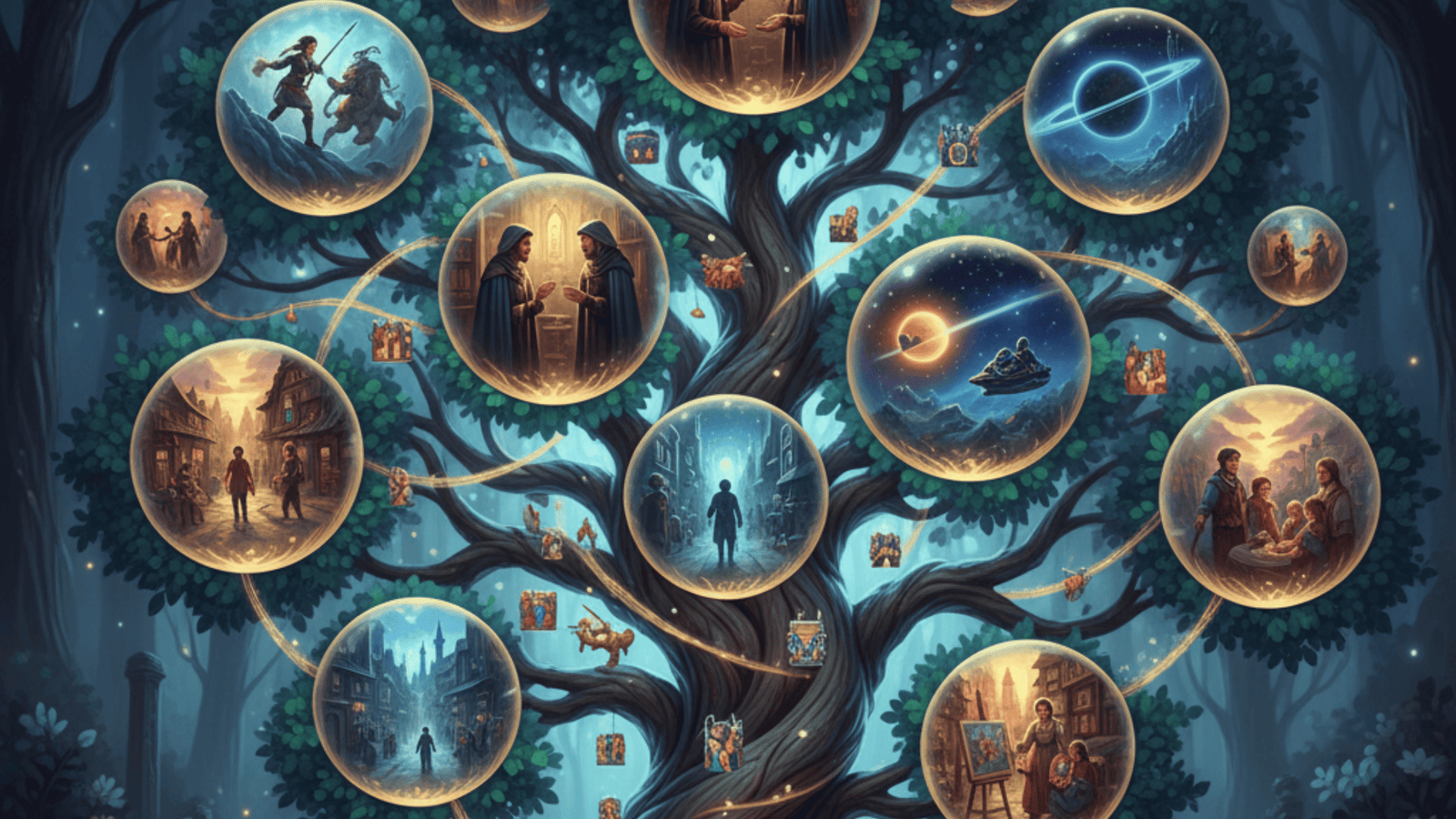
One of the characteristics of multi-stories is that the stories can be either disaggregated or cross-cut. With separate storylines: Each plot line ‘runs its show’: the two files do not interact directly. But also, when they are independent stories, they can have common themes, settings, or characters. The stories can be opposing perspectives of the same topic or an entirely different experience altogether.
On the other hand, when storylines are entwined, they affect each other. Characters can drift in and out of different stories, or something that happens in one story can have repercussions on another. For instance, a character’s decision in one story can create a ripple effect that carries over into the others, thus giving a feeling of cohesion and interwovenness to the story.
Different Characters, Different Times
Many times, there is more than one story, and the timelines are different, where characters have their arc, or the same incidents are just viewed from various angles. Each character will have their perspective on the story, and it will not only make for diverse storytelling but also enable the audience to see the other side of any issue.
Something else interesting with multiple stories is the different timeframes that can be employed. A narrative can span multiple epochs or show events unfolding over time. It’s a particularly compelling approach in historical fiction, where you might have one narrative in the past and another one in the present. They intersect historically and give you a bigger picture of the themes.
Complex Narrative Structure
Several narratives converge in a complex mosaic that transcends a linear story. The beauty of this is that it is a more complicated and multilayered method of storytelling. Instead of having one protagonist or a single narrative, it’s juggling different strands of a narrative, other characters, and different events. It allows a more complex story. This format enables ‘audiences’ to put the various threads of the story together and provide them with a ‘better workout upstairs’.
As an example, a book may alternate between two or more protagonist characters, each dealing with their own set of challenges. But as readers toggle back and forth between each story, they come to discover the ways the characters’ paths parallel and deviate and the ways their lives might intersect somewhere down the line.
Potential for Convergence
Oftentimes, the different stories converge at some point. It’s when various narrative strands converge in a climactic event or resolution, which offers an ending that feels appropriate to the audience. Events and characters can clash or unify in ever-changing ways, depending on how the subsequent stories are brought to bear on the original story.
The convergence is often a reward for the audience, as disparate or disconnected storylines that appear unrelated snap into logical alignment. And that can be like a punch, emotionally or intellectually, as the reader realises how each tale was a part of the larger story.
Multiple Storylines in the Media
Some of these hit movies and books tell stories through parallel stories to maintain a complex and engaging storyline. Here are a few examples:
- Game of Thrones: The classic example of a series with a large ensemble, with different parallel stories going on. Various factions, kingdoms, and characters have their dramas, but their actions and choices intersect, leading to a final climax where the destinies of many are intertwined.
- Cloud Atlas: This book, written by David Mitchell (also made into a movie), is six stories set in different centuries, and each affects the next in small, subtle ways. The book delves into reincarnation, destiny, and the oneness of all as characters across time find the echoes of one another’s choices.
- Pulp Fiction: In this Quentin Tarantino film, multiple storylines may appear to be in no way related at all, but ultimately intersect. Viewers’ perspectives can take the same scenes and see from an opposite side; the two positions are not interchangeable and attract interest.
Purpose and Pros of Layering Storylines
-
Exploring Complex Themes
You have noted that less “is being done” with the multiple storylines. They could do more complex stuff with the whole narrative. Further, through the presentation of various perspectives on the same problem, alternate storylines allow a more detailed engagement with those themes. A story about justice could, for instance, follow the perspectives of a defence attorney, defendant, and victim, giving richer insight into the concept.
-
Developing Character Arcs
Every plotline can have a distinct character arc, and it’s possible to deepen the characters. Since so many storylines are devoted to different characters, it’s a brilliant way to bring out varying sides to a character’s personality. This makes for a more complex, multi-dimensional characterisation.
-
Creating a Richer Storytelling Experience
More than one story is always better. The meshing of multiple storylines facilitates a range of emotions, motifs, and character progression, effectively adding depth and momentum to the plot. It’s also a great way to keep the audience engaged by introducing new angles and new conflicts and not letting the story go stale.
-
Maintaining Reader Interest
Several plots are also a good way to keep the reader interested. If you slow one story down or get less interested in one story, having other stories can hold you. This approach makes the pacing steadier, the story unpredictable, and never allows it to become too slow.
Conclusion: The Force of Many Narratives
A narrative with a significant number of subplots produces more profound, more complex, and engaging literature. Some can be standalone and others interlocking, and the presence of multiple storylines lends itself to an in-depth study of themes, characters, and places. That method has been employed in some of the world’s best and most influential books and movies, demonstrating its effectiveness in creating engaging, lasting stories.
In overloading the content part of the story, the media provides not only space for audiences to reflect and engage in debate but can also spread and appeal to a variety of tastes. Therefore, a single story can create more than one completely different story. Weaving characters, perspectives, and timelines generates richer, more powerful stories that connect on all deep levels with the reader.